Motorized Roller Shades: The Foundation of Window Automation
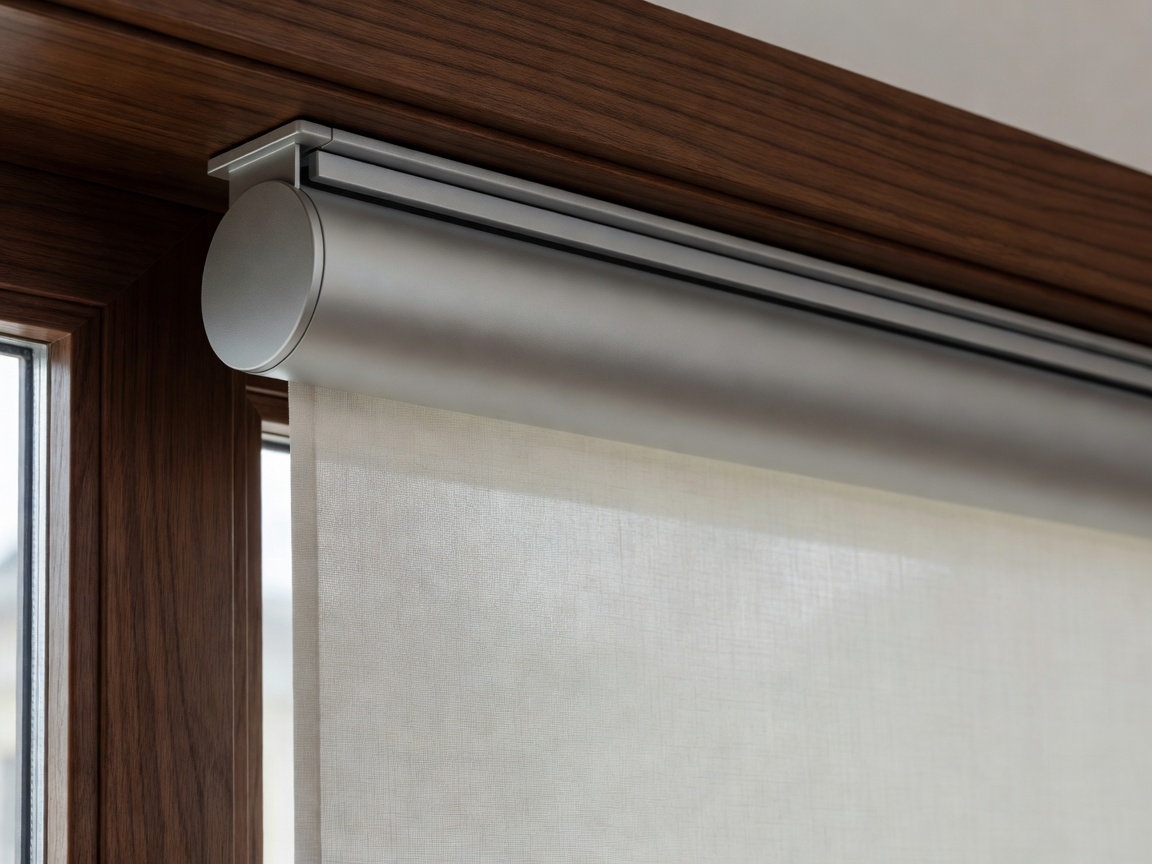
When transitioning from manual window treatments to automated systems, motorized roller shades represent the primary entry point for most residential and commercial projects. Their streamlined aesthetic, coupled with the mechanical simplicity of a single rotating axis, makes them highly reliable and versatile. Understanding the core components of these systems is crucial before committing to a whole-home installation.
Power Delivery Architectures
The most critical decision when selecting a motorized shade is how the internal motor receives power. Industry standards generally divide this into three distinct categories:
- Hardwired (Low or Line Voltage): These systems run dedicated cabling directly to each window frame. Line voltage (typically 120V or 240V) can handle massive, heavy shades for commercial applications. Low voltage (often 12V or 24V DC) is safer and easier to route through residential walls. The primary advantage is absolute reliability—no batteries to change, ever. The severe disadvantage is the requirement to open drywall if the home is not pre-wired.
- Internal Rechargeable Lithium-Ion: Modern battery chemistry has revolutionized this sector. High-capacity cylindrical cells hidden within the roller tube can power a standard shade for 6 to 12 months on a single charge. Recharging is handled via a long USB-C or proprietary magnetic cable attached momentarily to the motor head. This bypasses the need for electricians entirely.
- Replaceable Battery Wands: An older, though still active, standard where external plastic tubes filled with standard AA or D-cell alkaline batteries plug into the motor. While cheap up-front, the environmental waste and hassle of swapping 8 to 12 batteries per window twice a year pushes the market away from this architecture.
Acoustic Profiles and Motor Types
Not all motors are engineered equally. A common oversight in smart blind adoption is the acoustic impact of multiple motors operating simultaneously in a quiet room. Acoustic output is measured in decibels (dB), and premium motors are specifically damped to operate near-silently.
Standard DC motors utilize basic gearing that produces a distinct, high-pitched mechanical whine. For living rooms, this is often acceptable. However, for bedrooms or home theaters, premium "ultra-quiet" brushless motors are preferred. These advanced drives slow down as they approach their upper and lower limits—a feature known as "soft start/stop"—which prevents the fabric bottom bar from slamming into the window sill, further reducing noise.
Fabric Considerations
The automation hardware is only half the equation; the fabric dictates the environmental control. Motorized roller shades typically employ synthetic fabrics for dimensional stability, preventing the edges from fraying or curling over years of automated rolling.
| Fabric Type | Opacity Rating | Primary Application | UV Blockage |
|---|---|---|---|
| Solar Screen (1% - 10%) | Translucent | Living rooms, offices to cut glare while maintaining view | 90% - 99% |
| Light Filtering | Semi-Opaque | Dining areas, kitchens for privacy and diffused light | Moderate |
| Blackout / Room Darkening | Opaque (100%) | Bedrooms, home theaters for total light elimination | 100% |
Installation Tolerances
Unlike manual blinds, where a slight misalignment might just make the pull-cord stiff, motorized shades require strict adherence to level mounting. A roller tube installed off-level by even a few degrees will cause the fabric to "telescope"—wrapping unevenly and eventually rubbing against the mounting brackets, which can fray the fabric and stall the motor.
Professional installation often involves laser leveling and the use of shims behind the mounting brackets to ensure absolute horizontal alignment. When measuring for inside-mount shades, exact millimeter precision is required to minimize the "light gap" on the sides of the fabric, which is inherently wider on the motor side to accommodate the internal electronics and antenna housing.
Conclusion
Motorized roller shades are no longer a novelty; they are a mature hardware category. When assessing options, prioritize power architecture based on your tolerance for charging versus your willingness to drill walls. Pair a high-quality, low-decibel motor with a dimensionally stable fabric, and you secure a foundation that will reliably automate your home's lighting for years to come.