Retrofit Blind Motors: Keep Your Shades, Add Automation
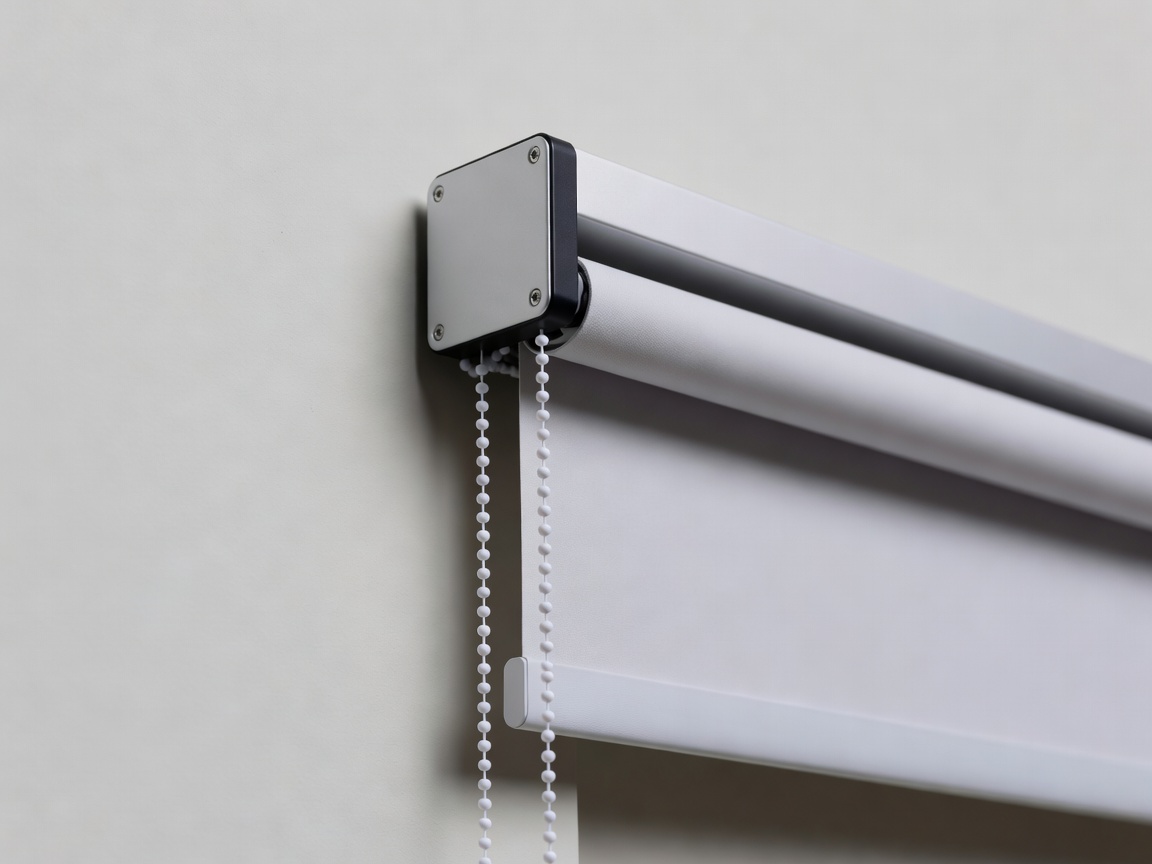
Custom motorized window treatments carry a significant premium. For homeowners with existing, high-quality manual blinds—particularly custom cut wood slats or expensive Roman shades—discarding the hardware entirely is economically and environmentally wasteful. The retrofit market has expanded rapidly to solve this precise issue, offering external and internal hardware modifications that add smart capabilities to "dumb" blinds.
The Two Primary Retrofit Approaches
Retrofitting breaks down into two fundamentally different mechanical approaches, dictated primarily by the type of blind you are attempting to automate.
1. External Bead Chain Drivers
The most accessible entry point to window automation is the bead chain driver. These are small, wall-mounted rectangular boxes that house a gear mechanism. You loop the existing continuous bead chain or cord of your roller blind over the gear, pull it taut, and mount the box to the window frame or wall. When the motor spins, it physically pulls the cord, mimicking human interaction.
Pros: Absolutely no modification to the blind itself is required. Installation takes less than ten minutes. They are universally compatible with any shade operated by a continuous loop (roller, roman, vertical).
Cons: Aesthetically, they introduce a visible plastic box to your window frame. They are noticeably louder than internal motors because the gear mechanism operates externally and the chain rattling adds to the acoustic profile. Furthermore, they are inherently slower, as the motor must overcome the friction of the external cord pulling mechanism.
2. Internal Tubular Replacement Motors
A much cleaner, though mechanically demanding, retrofit involves removing the roller blind from the window, pulling out the passive plastic clutch mechanism from the aluminum tube, and sliding in a battery-powered tubular motor.
Pros: This yields a result indistinguishable from a factory-built motorized shade. The aesthetic is perfectly clean, with no visible cords or wall boxes. Operation is faster and significantly quieter than bead chain drivers.
Cons: Compatibility is a major hurdle. The internal diameter (ID) of roller tubes varies wildly between manufacturers (e.g., 25mm, 28mm, 38mm). You must source a motor and specific rubber "crown and drive" adapters that precisely match your tube's internal profile. If your existing tube features a proprietary internal spline (groove) shape, finding an adapter can be challenging.
Automating Venetian and Slat Blinds
Standard roller shades only require rotational control to lift and lower. Venetian blinds (horizontal wood or aluminum slats) present a dual-action problem: tilting the slats and lifting the entire blind. The retrofit market has largely determined that lifting heavy wood blinds requires too much torque for a battery-operated retrofit. Therefore, most Venetian retrofits focus solely on the tilt mechanism.
Tilt retrofits involve removing the manual twist-wand mechanism from the headrail and replacing it with a small motor block. This allows automated control over light and privacy by rotating the slats open or closed based on schedules or voice commands, even though raising the blind fully still requires manual cord pulling. For most users, automated tilting addresses 90% of their daily interaction with the blind.
Cost-Benefit Analysis
| Approach | Average Cost / Window | Installation Difficulty | Visual Impact |
|---|---|---|---|
| Bead Chain Driver | $50 - $120 | Very Low | High (Visible wall box) |
| Internal Tubular Motor | $70 - $150 | Medium | Zero (Completely hidden) |
| Tilt-Only Retrofit | $60 - $130 | High | Zero (Hidden in headrail) |
| New Custom Smart Blind | $250 - $600+ | Low | Zero (Purpose built) |
Final Verdict
Retrofitting is an excellent gateway into window automation. If you possess standard roller shades and are willing to take exact measurements of the inner tube, the internal tubular replacement offers incredible value. For renters or those unwilling to disassemble hardware, bead chain drivers provide instant, albeit less elegant, smart functionality. In either case, verifying compatibility before purchase is the most critical step in a successful retrofit project.