Smart Home Integration Architecture
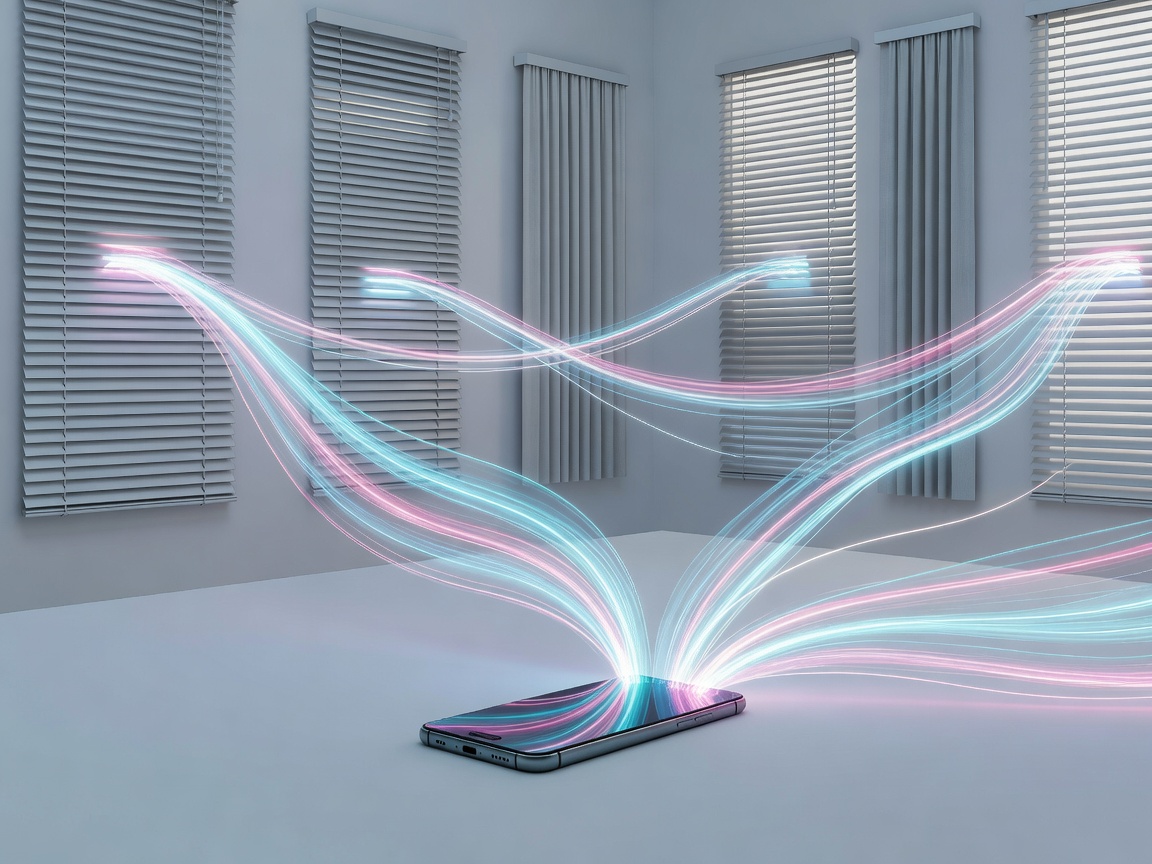
A motorized blind controlled exclusively by a remote control is not truly a "smart" device; it is merely an electric one. True automation requires integrating the blind's motor into a broader ecosystem where it can interact with sensors, schedules, and voice commands. Navigating the communication protocols that enable this integration can be the most confusing aspect of window automation.
The Bridge vs. Bridge-less Debate
Traditionally, blind motors operate using proprietary Radio Frequency (RF) signals (commonly 433 MHz). Because smartphones and voice assistants (like Amazon Echo or Apple HomePod) do not broadcast at 433 MHz, an intermediary device is required. This device is known as a smart bridge or hub.
Hub-Based Systems: The hub connects to your home Wi-Fi network and translates internet commands into RF signals that the blind understands. While this adds an extra point of failure and requires plugging another white box into your router, it allows the motors to remain relatively simple and battery-efficient.
Hub-less Systems (Wi-Fi & Bluetooth): Some modern motors feature built-in Wi-Fi chips. These connect directly to your home router, eliminating the need for a bridge. However, Wi-Fi is notoriously power-hungry. A direct-Wi-Fi battery-operated blind will drain its charge significantly faster than an RF model. Bluetooth exists as a low-power hub-less alternative, but its severe range limitations make it unsuitable for whole-home control.
Navigating the Protocol Soup: Zigbee, Z-Wave, and Thread
For enthusiasts building robust smart homes, standard RF or Wi-Fi is often passed over in favor of mesh networking protocols. These protocols are designed specifically for smart home devices, balancing extreme low power consumption with massive scalability.
| Protocol | Network Topology | Interoperability | Power Draw |
|---|---|---|---|
| Zigbee | Mesh Network | High (Requires Zigbee Hub) | Very Low |
| Z-Wave | Mesh Network | High (Strict certification) | Very Low |
| Thread | IPv6 Mesh | Excellent (Future-proof) | Ultra Low |
Mesh networking means that every powered device acts as a repeater. If a blind in the master bedroom is too far from the hub, the signal hops through the smart light switch in the hallway to reach it. This makes the network stronger as you add more devices.
The Impact of Matter
The fragmented landscape of smart home integration is currently undergoing a massive unification effort known as Matter. Developed jointly by Apple, Google, Amazon, and others, Matter is a unifying standard. If a smart blind is Matter-certified, it is guaranteed to work locally with Apple Home, Google Home, Amazon Alexa, and Samsung SmartThings without needing to download a manufacturer-specific app or rely on proprietary cloud servers.
When selecting new hardware, choosing Matter-over-Thread certified blinds represents the most future-proof investment, ensuring your window treatments will remain responsive regardless of which voice assistant ecosystem you choose to adopt down the line.
Practical Automation Scenarios
Once integrated into a cohesive platform, the true value of smart blinds is unlocked through conditional routines:
- Thermal Management: Integrating interior temperature sensors to automatically lower blackout shades when a room exceeds 75°F in the summer, drastically reducing HVAC loads.
- Circadian Rhythms: Scheduling shades to open precisely at sunrise, allowing natural light to replace harsh audible alarms.
- Security Mockup: Utilizing "vacation mode" routines that randomize the opening and closing of street-facing blinds to simulate occupancy when the house is empty.
- Media Mode: A single voice command ("Movie Time") that simultaneously dims smart bulbs, turns on the television, and drops blackout shades to eliminate screen glare.
Conclusion
Hardware may lift the fabric, but software defines the experience. Relying on isolated, proprietary hubs is a rapidly aging paradigm. By prioritizing open standards like Zigbee or, preferably, Matter-over-Thread, you ensure your window treatments act as cooperative components in a holistic smart home ecosystem, rather than siloed remote-controlled appliances.