Solar-Powered Smart Blinds: Sustainable Window Automation
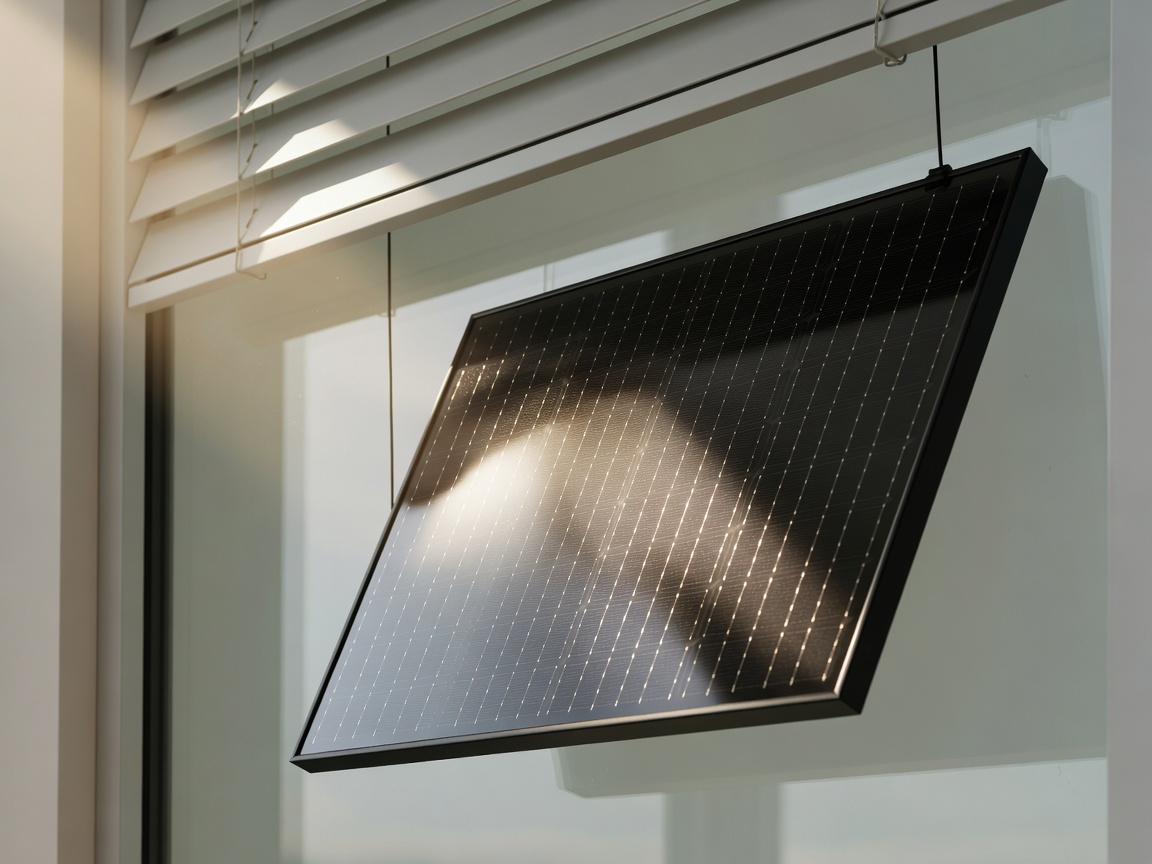
One of the primary frustrations associated with retrofitting battery-operated smart home devices is the perpetual cycle of recharging. For window treatments, especially those located high in two-story foyers or behind heavy furniture, manually accessing the motor with a charging cable every six months is a significant friction point. Solar-powered smart blinds present a compelling solution, utilizing the window's natural exposure to sunlight to create a theoretically infinite power loop.
How Solar Integration Works
Solar-powered blinds do not run directly off the sun's energy in real time. The energy generated by a small solar panel is insufficient to meet the sudden, high-torque electrical draw required to turn a motor and lift a heavy fabric. Instead, solar panels act as trickle-chargers for internal lithium-ion batteries.
The system comprises three main parts:
- The Photovoltaic (PV) Strip: Typically a narrow, elongated rectangle measuring about 12 to 18 inches long. It is designed to be as unobtrusive as possible.
- The Charge Controller: A small circuit, usually built into the motor head, that regulates the fluctuating voltage from the solar panel, preventing the lithium battery from overcharging or overheating.
- The Battery Cell: A high-density battery pack (often 7.4V or 12V) nestled inside the blind's roller tube.
Mounting and Aesthetics
The placement of the solar panel is critical for efficiency but inherently impacts aesthetics. Most systems utilize adhesive pads to stick the PV face directly against the interior surface of the window glass, facing outward. A thin cable then runs from the panel to the motor head.
While designed to be discreet, the panel is visible from both inside and outside the home. The thin connecting cable must be carefully routed to avoid tangling with the moving fabric. For homeowners seeking an utterly flawless, minimalist window frame, this extra hardware can be a visual detractor. However, if mounted high near the valance or window casing, it is often hidden behind the blind's fascia.
Environmental Dependencies
The viability of a solar setup depends entirely on environmental factors. The panel must receive adequate light to outpace the battery drain caused by daily operation and the passive energy draw of the motor's radio receiver waiting for a signal.
| Window Orientation (Northern Hemisphere) | Solar Yield | System Viability |
|---|---|---|
| South-Facing | Maximum Direct Sunlight | Excellent. Battery will likely stay near 100%. |
| East/West-Facing | Partial / Seasonal Direct Sunlight | Good. Sufficient to maintain charge over the year. |
| North-Facing | Ambient / Indirect Light Only | Poor. Will likely require manual charging eventually. |
Furthermore, modern high-efficiency windows pose a challenge. Many double or triple-pane windows feature low-emissivity (Low-E) coatings designed specifically to block solar energy and UV rays. Depending on the aggressive nature of the window tint or coating, the solar panel's output can be reduced by 30% to 50%, necessitating larger panels or more direct light to compensate.
Pros and Cons
The Advantages: The primary benefit is zero maintenance. Once installed in an appropriate location, the blind becomes entirely autonomous. This is exceptional for clerestory windows, skylights, or multi-story architectural glass that requires a ladder for access. It also provides a minor, yet measurable, environmental benefit by extending battery lifespans—batteries kept consistently topped off experience less depth-of-discharge wear than those constantly drained to zero.
The Limitations: Beyond aesthetic concerns and window coating interference, cost is a factor. Solar kits add an additional premium to the base motor price. If the window is shaded by large trees, a deep porch overhang, or neighboring buildings, the investment in solar hardware yields no return, and the user must revert to manual charging regardless.
Conclusion
Solar-powered smart blinds are not a universal panacea for battery management. They are an engineering solution that performs exceptionally well under specific conditions. By assessing window direction, potential shading, and glass type before purchasing, you can determine if the promise of zero-maintenance window automation will hold true for your specific installation.